Overview of Cross-Platform Online Gaming: Cross-platform Online Games For Switch 2 And PS5
In the ever-evolving landscape of gaming, cross-platform gaming has emerged as a significant trend, allowing players to engage with friends across various platforms. This approach not only fosters community but also enhances player experience in a way that traditional platform exclusivity cannot.
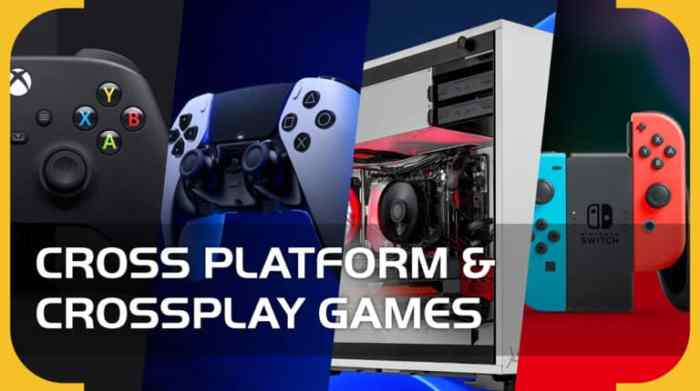
Cross-platform gaming refers to the capability of players using different gaming hardware to play together in the same game environment. Its significance lies in breaking down barriers that have historically separated player communities. For developers, this means a broader audience and increased lifespan for their games. The benefits for players include more opportunities for multiplayer interactions and a larger pool of gamers to connect with. However, enabling cross-platform play requires several technical considerations including network compatibility, game balance, and user interface uniformity across platforms.
Popular Cross-Platform Games for Switch 2 and PS5, Cross-platform online games for Switch 2 and PS5
Several games have successfully embraced cross-platform play between the Switch 2 and PS5, drawing massive player bases and enhancing the overall gaming experience. Here are some standout titles:
- Fortnite: A battle royale game that has redefined multiplayer interaction, allowing players to team up regardless of their gaming device.
- Rocket League: This unique blend of soccer and vehicular mayhem offers a competitive experience across both platforms, complete with cross-progression features.
- Call of Duty: Warzone: A popular free-to-play battle royale that allows players to engage in intense combat across platforms while maintaining balanced gameplay.
These games not only provide thrilling gameplay but also include features like cross-progression and unified in-game events, ensuring that players can seamlessly switch between devices without losing their progress.
| Game Title | Player Ratings | User Feedback |
|---|---|---|
| Fortnite | 9.5/10 | “The best way to play with friends!” |
| Rocket League | 9/10 | “Crazy fun and addictive!” |
| Call of Duty: Warzone | 8.5/10 | “Intense and competitive, a must-play!” |
Technical Challenges of Cross-Platform Play
Developing cross-platform games comes with its share of technical challenges. One of the most common issues is ensuring consistent performance across different hardware specifications. Additionally, network stability and latency can vary greatly between platforms, impacting gameplay.
To address these challenges, developers employ various strategies. For instance, they can utilize cloud-based servers to minimize latency and ensure that all players experience a similar level of performance. Game optimization techniques, such as adaptive graphics settings, also play a crucial role in balancing performance across devices.
Several case studies illustrate successful navigation of these hurdles. For example, Fortnite was able to create a unified experience despite the differences in platforms through regular updates and community feedback, allowing them to address issues promptly.
Community and Social Features in Cross-Platform Games
Community engagement is vital in cross-platform gaming, as it fosters a sense of belonging among players from various backgrounds. Games that support cross-platform play often incorporate social features that enhance interaction.
Features such as voice chat, friends lists, and in-game events encourage players to connect and collaborate. Both Switch 2 and PS5 have integrated social functionalities that allow players to communicate effortlessly, regardless of their platform.
“Playing with friends on different systems has never been easier. The community feels more connected!” – A satisfied player.
Future Trends in Cross-Platform Gaming
As the gaming industry progresses, several emerging trends are likely to shape the future of cross-platform gaming. One notable trend is the increasing adoption of cloud gaming technologies, enabling players to access high-quality games on lower-end hardware without sacrificing performance.
Predictions suggest that game development will continue evolving to support more cross-platform titles, particularly as cross-play becomes a standard expectation rather than a feature. Anticipated technologies, such as advanced AI for matchmaking and improved server infrastructures, will significantly impact the accessibility and quality of cross-platform experiences.
Game Development Considerations for Cross-Platform Titles
When creating cross-platform games, developers must consider various factors to ensure optimal gameplay. Balancing performance and gameplay mechanics across different platforms is essential to provide a consistent experience for all players.
Development tools and frameworks play a crucial role in this process. Many developers turn to engines like Unity and Unreal Engine, which offer robust support for cross-platform development, enabling smoother transitions and game performance adjustments.
| Development Tool | Supported Platforms | Key Features |
|---|---|---|
| Unity | PS5, Switch 2, PC | Cross-platform support, user-friendly interface |
| Unreal Engine | PS5, Switch 2, PC | High-quality graphics, powerful performance optimization |
Player Preferences in Cross-Platform Gaming
Several factors influence player preferences when it comes to cross-platform games. These preferences can be shaped by demographics, including age, gaming experience, and social circles.
Survey data indicates that younger players tend to favor cross-platform features, valuing the ability to play with friends on different devices. Additionally, players often cite accessibility and game diversity as key reasons for their preference for cross-platform titles.
Overall, understanding these dynamics is crucial for developers aiming to create appealing cross-platform experiences in the competitive gaming market.